Monday, June 9, 2008

Ecotourism: La Selva Research Station

On Thursday we travelled to La Selva Research Station north of San Jose. La Selva is a bilogical research station run by the Organization for Tropical Studies, and there are miles of paths through the rainforest that allow scientists as well as tourists to view and study the diverse area around them. It is comprised of 1,614 hectares (3,988 acres) of old growth and disturbed tropical wet forest. La Selva has an extremely rich species diversity, including more than 1,850 species of vascular plant flora, 350 species of trees, more than half of the 886 species of birds in Costa Rica, five of the six species of felines in the country, more than 70 species of bats, approximately 500 species of ants, and thousands of reptiles, amphibians and other insects. It was one of the first protected areas in Costa Rica, and it brings guests from all over the world to view nature at its finest. La Selva participates in ecotourism by educating its visitors about the importance of species diversity, the effects of global warming, and about some of the current experiments that scientists are conducting at the station. They hire local employees and train local guides, as well as providing services for hotels and other parts of the tourism sector of the economy. The research station at La Selva works to promote environmental consciousness and the importance of species diversity for life on earth.

While at La Selva, we wnt on 3 different hikes through the rainforest. The first one was in the afternoon on Thursday, and we saw a bunch of really exciting animals and plants. There were huge caterpillars on the ground, and tons of poison dart frogs all over the place. These tiny frogs are red with blue legs and are lethal if eaten. We also saw monkeys playing up in the canopy and toucans flying from tree to tree. That night a few of us went on a night hike looking for snakes because there are supposed to be thousands of snakes all over these forests. We didn't see any snakes, but we saw plenty of huge spiders and other insects. In the morning we went on our last hike, and we saw at least 10 different species of birds. We learned from our guide about many of the plants in the area, including one plant that sends some of its roots down from the middle of its stem.

Thursday, June 5, 2008

The Osa Peninsula

On Sunday we travelled all day (for about 8 or 9 hours on a cramped tour bus) to get to the Osa Peninsula which is in the southern part of the country. The trip was pretty eventful, as the highways to get there are roads made of rocks and dirt. If the roads were actually paved all the way there, it probably would have cut our travel time in half. But, it was still nice to be able to enjoy the scenery going through extremely small towns. After about 5 hours of driving, we ran into some trouble: one of the bridges was out! We had no idea what was going to happen because we were in the middle of absolutely nowhere. After asking a few of the townspeople, we turned around and found a different road to get to our destination. But this had some problems too. One of the bridges that we had to go over was pretty shaky and thin. We all had to get out of the bus so that the bridge wouldn't collapse underneath us, and the driver had to take 30 minutes to maneuver the bus down the steep slope before the bridge and come out on the other side. We had to recruit a bunch of the townspeople to help out, and eventually all of the guys got behind the bus and pushed so that the back end didn't hit the ground. If the bus had been 6 inches longer, we definitely would not have made it! After that ordeal, we had to travel on a dirt road through a field of palm tress that stretched on for miles. After another hour, we finally reached a paved road and took that to a town on a river that continued on to the ocean. We all boarded some large motorboats and sped off to the river delta and into the ocean. The views were gorgeous throughout the whole ride, which took about two hours. We ended up in a remote little town and had to wade from the boats in the water onto the beach where jeeps were waiting to take us up into the hills to our "hotel." The place we stayed was unlike anywhere I have ever been! Our rooms were platforms with tents on top of them that looked out over the ocean. It was like camping, except we had a working toilet and shower (with no hot water of course) and actual beds with headboards and everything. The main building was a gorgeous open room with wood floors and couches. This is where we ate breakfast and dinner, and hung out all day when we had nothing to do. We had to take our shoes off when we walked in because everything outside was so muddy, which was fun because its not very often that I walk around nice places barefoot. The first night we hung out in the main lodge and played cards. We saw plenty of huge bugs and even a frog hanging out by the stereo.


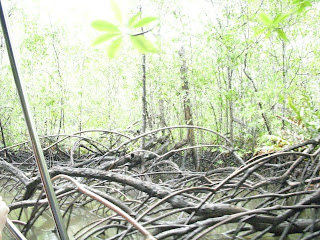
The trees that we went through on our boat ride in the river. All of their roots are above ground and they are only located in the river, not on its shore.


The beach we ended up at.

The view from the lodge.


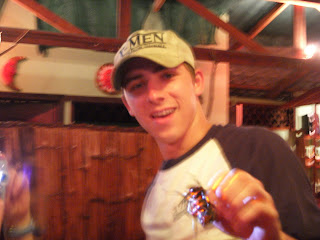
Jon, Julianna, Marty, and Carmen hanging out in the lodge.


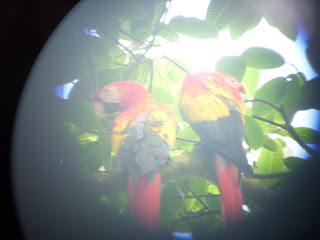
The next morning we took the boats out and travelled along the shore to the Corcovado Reserve, which is a large area of preserved rainforest. We set out on our first hike which was very exciting. We got to see howler monkeys up in the trees, macaws (which are huge red, yellow, and blue birds), leaf cutter ants, agoutis, and tons of other fun things in the rainforest. We walked along the beach for part of it, and i even learned how to break open a coconut. All together, we hiked for about 3 hours, and by the time we got back the tide was so high that we had to wade with our clothes above our heads through one of the streams that feeds into the ocean. We came back to the main uilding at the reserve and ate a delicious lunch, and spent about 30 minutes at the beach. Then we set off on a 30 minute hike out to a waterfall deep in the rainforest. The hike their was awesome, as we hide to rough it over and under trees, through streams, and up and down steep hills. The waterfall was gorgeous and we all got to jump off one of the ledges into the pool at the bottom. It was so much fun to be in the middle of pure nature.


The next morning we set off on the boats for about an hour to Cano Island to go snorkeling. Despite the rain we sped over huge waves and by the time we got their it had stopped raining, even though it was still pretty cloudy. Snorkeling was amazing, and I saw tons of really cool fish and coral. We got to dive down to the bottom and see everything up close, and I even followed a huge school of fish around the area. After snorkeling, we ate lunch on the beach and played with the hundreds of little crabs running around on the shore. By the time we left the island, the sun had come out, and on the boat ride back to our hotel we got to see dolphins swimming at the top of the water! They dove in and out of the water in their search for food, and I was so excited to see dolphins out in the wild. That night back at the hotel, we drank at the main lodge with the owner, Fernando, who is definitely one of my favorite Ticos that I have met so far on this trip. He was so fun and got us all up and doing the salsa and merengue. I learned how to play the card game hearts which I was horrible at first but Im getting decent at it now. We all had a blast that night and were all pretty tired from the long day. We left for San Jose the next morning, and on the boat ride back we got to see a crocodile up close on the bank of the river. The views from the ocean and the river were absolutely gorgeous; everywhere around us was paradise.

Ecotourism in Costa Rica

This past week was full of eco-tourism adventures. On Saturday we went whitewater rafting on the gorgeous Pacuare River. It was soooo much fun and I had a great guide named Ricky who I got to talk to on the bus ride their. Talking to him made me realize how much I love the people here in Costa Rica because they really are so genuine and nice. Also, we decided he has the best job ever. On the rafts we got the real sense of what "pura vida" means, which is one of the common expressions that everyone in Costa Rica uses. The literal translation is Pure Life, but it can be taken in so many different ways, and one of them is that life is truly amazing. We definitely realized this while taking in the scenery and the excitement while whitewater rafting. The river was in great shape and the rapids were intense. I even fell out once in one of the Class 4 rapids which was actually so much fun! Its funny to notice that safety regulations are definitely not as strict in the U.S. Before jumping into the rafts, we got a few instructions about what to do in certain situations, but for the most part they just kind of put you in the boats and said good luck! It actually makes it much more exciting, and a few people in our had some close calls. Luckily, everyone came out alive and we all had a blast. Throughout the trip we learned a lot about the area surrounding the rapids, including plenty of interesting facts about the native tribes that live along the river. We could see their huts and even rope swings on which they transport barrels of goods across the river. The guides told us much about their culture and how Costa Rica has worked to preserve these areas for the native peoples. Costa Rica is proud of its heritage and wants to preserve it and the environment in any way possible. They try to promote this by educating tourists about the goals and values that they have and why they are so important. Clearly, anything you do in this amazing country involves some sort of ecotourism.


There are a number of indigenous populations throughout Costa Rica, including the Bribri, Cabecar and the Boruca. These three groups live in the mountains of Talamanca located in the southern part of the country. The Bajo Pacuar Indians live along the banks of the Pacuare River, and these are the indigenous peoples that we saw while whitewater rafting. In general, only 1% of Costa Rica's population is of aboriginal blood. Because of this extremely low number, the government and other organizations have been working to preserve the cultures and customs of the natives. In 1977, the government passed a law that established Indian Reserves and protected its occupants from persecution. The tribes that we viewed along the Pacuare all had straw houses in the hills overlooking the river. They are very peaceful groups and they live off the land surrounding them. Also, most have thier own language that is very different from Spanish. We saw a number of families fetching water from the river and I was surprised to see that they all wore western dress. It is important to Costa Ricans that the customs of the indigenous tribes are conserved because of the pride they have in their heritage and history. Every person who chooses to engage in the ecotourism of the country by visitng this river can come to notice the importance of these tribes.

Friday, May 30, 2008

Tarzan Swing Video!

This is a video of Saul, one of our professors, on the tarzan swing. Sorry its sideways.

Plants that Move!

This is a video of a species of plant we found on our nature walk near the volcano that colse their leaves when you touch them!


The Hydro-Electric Power Plant and Sustainability

While we were in Arenal, we stopped at a hydroelectric power plant that supplies much of the electricity to surrounding towns in Costa Rica. It is owned by ICE, the main power and telephone company in Costa Rica. Also, "ICE is the sole authority of Costa Rica's electric power system, with hydroelectric power accounting for about three-quarters of its total power supply." This is very crucial for maintaning Costa Rica's commitment to the environment. While we were there, we got to stand on the dam and one of the mangers of the companies that owns the plant told us everything about it. We learned how it all worked and found out some pretty interesting facts about how it operates. The dam took two years to build, and the water is drained from the river down 2 miles of pipes to the power generation station. This allsows the water to reach super fast speeds so that it can spin the turbines and create electricity. We got to see the turbines in action and it was incredible to see how fast they really spun. The hydroelectric power plant is a great source of renewable energy, especially in Costa Rica where it rains almost every day. This is one example of how sustainability can be applied to certain areas depending on the environment that it is located in. Other areas of the world should find out what source of renewable energy will work best for their ecosystem and use this to benefit the environment as much as possible and curb us away from our dependence on fossil fuels. Here are a few pictures from the power plant:

View of the dam. The water was pretty dirty from all the sediment.

Daine and Steve!

Marty and Rob on the other side.

I thin one of the holding tanks.

One of the turbines spinning to create electricity.

Dole Bananas in Costa Rica


Dole bananas are one of the chief exports in Costa Rica today, and they have a well known reputation for being an environmentally friendly and socially just company around the world. In July 1998, Dole's banana plantations in Costa Rica became the first agricultural producer in the world to receive its ISO 14001 certification developed by the International Organization for Standardization for approved environmental management. This was very important in Costa Rica because of the value put on environmental sustainability and eco-friendliness for companies in the country. Then, on March 2, 2005, Dole announced that its banana farms in Costa Rica recieved certification to the Social Accountability International SA 8000 work place and human rights standard. This certification has improved the Dole reputation even more, as it focuses on "child labor, forced labor, health and safety, freedom of association and the right to collective bargaining, discrimination, disciplinary practices, working hours, compensation and the implementation of an efficient management system." It is a standard that is certified by the ILO conventions, the United Nations' Universal Declaration of Human Rights and the Convention on Rights of the Child. The certification covers the planting, harvesting, and packing of bananas for export to the United States and Europe. Obviously, Dole is working very hard to ensure that they are striving for eco-friendliness and social justice.


This certification is a huge step for a banana plantation in Costa Rica because they normally have been known to disregard any rights of workers, pay extremely low wages, and put employees in danger while on the job. Many of the pesticides normally used for banana production have ruined thousands of acres of land, transforming them from diverse tropical ecosystems to barren, chemical filled fields that can now only be used to produce bananas. These pesticides and chemical eventually collect in the soil, ground water, and any runoff from the plantation, putting surrounding towns in danger as well. Also, these pesticides are still extremely toxic, and over 60% of reported pesticide poisonings in Costa Rica are from banana plantation workers. According to the book Green Prison, written by a banana plantation worker, "workers rarely receive adequate and appropriate protective clothing, nor are they properly trained to use pesticides safely." Clearly, banana plantations are not a very safe place to work. However, Dole has ensured, through their environmental and sociail certifications, that they are committed to safer working conditions and environmentally safe plantations. Dole has also received many other recognitions and awards for banana production in Costa Rica, including its corporate social responsibility program. Lastly, Dole has an excellent commitment towards the environment and its workers in Costa Rica, as the compnay has announced an Earth Day Agreement to offset carbon emissions in banana transport, the conversion of its farm equipment to bio-deisel fuel, and has renewed its goals for their health and education programs in Costa Rica.